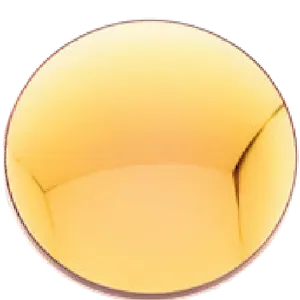
Tinted lenses represent a special category of optical products, designed to provide superior protection in bright light conditions, increased visual comfort and optimal contrast perception.
Depending on the shade and intensity, they can be adapted for everyday activities, outdoor use, sports, high-light environments or for specific therapeutic needs. The design and chromatic filtering are calibrated to reduce distracting light, control reflections and optimize
Recommended for users who:
I spend a lot of time outdoors, in bright light or intense reflections
Have increased sensitivity to light (photophobia, discomfort in bright light)
Practice outdoor sports activities - cycling, running, hiking, fishing, tennis
I want to improve contrast and detail perception, depending on the shade chosen
Have special visual needs that can benefit from dedicated color filtering (e.g. therapeutic shades)
Looking for an aesthetic and functional solution that combines visual appeal with sun protection and UV
Performance felt in use:
Reducing the intensity of strong light for visual comfort outdoors
Complete UV filtration, essential for long-term eye protection
Control of reflections, especially in dark shades or with specific AR treatments
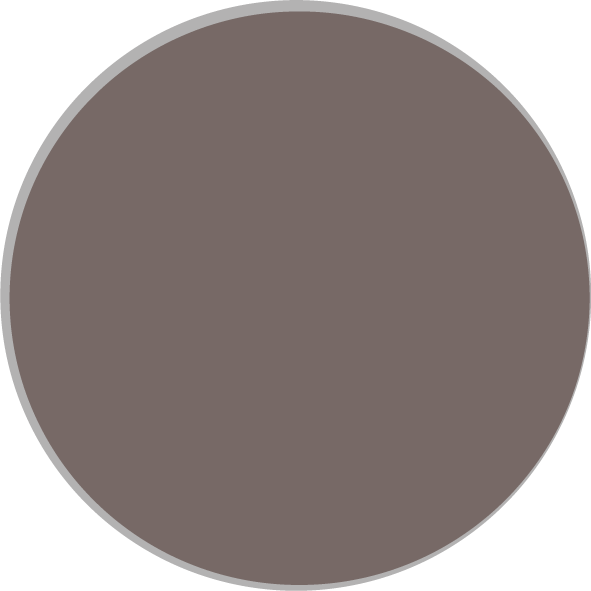
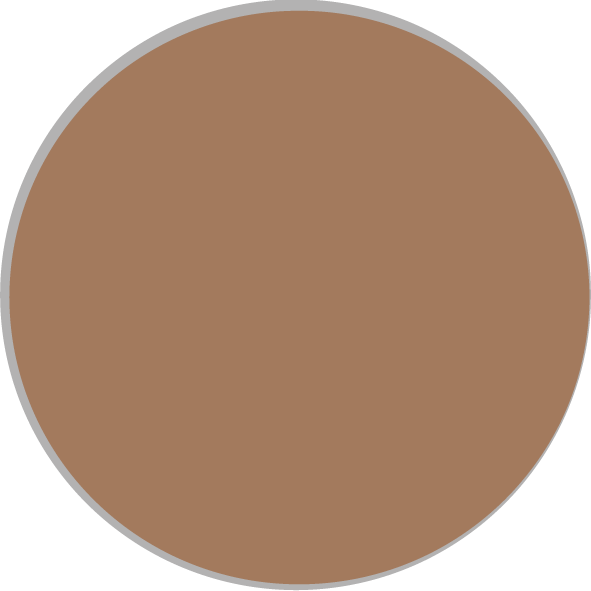
Improved contrast, adapted to the activity (brown for relief, green for nature, gray for neutrality)
More relaxed visual perception, without glare that tires the eye
Pleasant aesthetic appearance, adaptable to the wearer's style
Professional recommendations:
They can be recommended as an additional pair, dedicated to outdoor activities, sports or light sensitivity.
It is not recommended as the only type of lens for indoors, especially at high absorptions, due to the reduction in transmitted light.
For light or therapeutic shades, we recommend materials with an index of 1.50 or 1.60, where the pigment is distributed more evenly and the shade remains stable without excessive darkening effects.
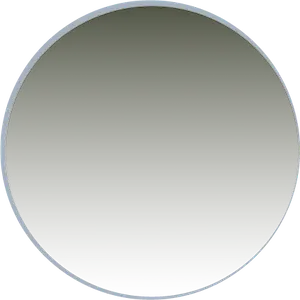
For gradient colored lenses, it is recommended to send the axis direction when placing the order, to ensure the correct orientation of the color transition.
All tinted lenses must be ordered with at least (HC) hardening varnish, which is essential for shade stability, pigment protection and surface wear resistance.
The color intensity may vary depending on the lens index and the anti-reflective treatment applied (the color of anti-reflective lenses may vary by up to 3% compared to the sample).
Trivex (1.53) and Polycarbonat (1.59) lenses cannot be tinted.
For indices 1.5 it is recommended to order with additional filter UV, to ensure UV protection %
Intensity of coloring according to index
INDEX
1.5
1.56
1.6
1.67
1.74
SOLID
85% - 15%
75% - 15%
85% - 15%
85% - 15%
85% - 15%
GRADIENT
85% - 25%
75% - 25%
85% - 25%
85% - 25%
85% - 25%
Intensity of coloring according to index
Organic
LENS
BROWN
GRAY
VERDANT
Photo 1.56
7% - 65%
7% - 70%
9% - 70%
Photo 1.5, 1.6, 1.67
10% - 75%
10% - 80%
NuPolar
78%
Gray 1
65%
Gray 3
83%
Green G15
85%
NuPolar Infinite Grey
60 - 91%
Transitions Drivewear
50 - 85%
Mineral
Photo
14% - 60%
13% - 60%
CLASSIC colors
Gray
Brown
Verdant
15%
solid
25%
solid
50%
solid
75%
solid
85%
solid
25%
0%
gradient
50%
0%
gradient
75%
0%
gradient
85%
0%
gradient
colors FASHION
25%
Yellow
Sky Blue
Lagoon
30%
Jungle
45%
Purple
Red
50%
Modern
Summer
60%
Peach
85%
Marine
Ocean
colors MIRROR*
Mirror Flash
Mirror Gold
Mirror Silver
Mirror Blue
Mirror Lime
Mirror Orange
Mirror Violet Rose
Mirror Gold Pink
*The base color may differ from the sample. *The base color for samples is: gray 85% or brown 85% depending on the color mirror.
!!! ATTENTION !!! The colors are for informational purposes only and may differ from the real ones. For your safety, please check the colored lens sample.
5 levels of protection
Tv min 80%
Tv max 100%
Transparent or with low degree of staining
Inside or on cloudy weather
Tv min 43%
Tv max 80%
Degree of coloring small
luminosity low
Tv min 18%
Tv max 43%
Degree of coloring environment
Average brightness (moderate sun)
Tv min 8%
Tv max 18%
Degree of coloring high
Strong brightness (strong sun)
Tv min 3%
Tv max 8%
Degree of coloring very high
Very high brightness (Extremely intense sun)
Driving restrictions
All specifications are defined in the EU Standardization for prescription lenses regarding transmittance: EN ISO 8980-3.
Driving restrictions depend on three main characteristics:
Correct perception and recognition of traffic lights
The transmission ratio must be greater than 20% of the light transmittance (Tv) at any wavelength between 475 nm and 650 nm
Light transmittance (Tv) must be greater than a required minimum value
Daytime driving restriction:
Tv < 8%
Night driving restriction:
Tv < 75%
Therapeutic Colors - Selective Therapeutic Filters for Optics
Selective therapeutic filters are an advanced optical solution used to improve visual comfort and manage photophobia in patients with ocular pathologies or light sensitivities. Unlike traditional aesthetic tints, these filters are designed to modify light transmission in a spectrally precise manner, controlling absorption over narrow wavelength ranges (450–600 nm). Therapeutic filters do not represent a treatment for the disease itself, but an optical device for symptom management, being individually selected depending on the patient's clinical needs, the level of photophobia and the environment in which they work.
Professional recommendations
Filters can only be applied to index 1.5. Use Hard-Coat (HC) treatment for pigment protection. Use the correct pupillary distance and height for a full therapeutic effect.
Filters are not just "colors", but optical systems. Incorrect installation reduces the effect by 20–40%.
The patient should test the filter:
outside
in artificial light / in cold light (LED, neon)
on the screen
with rested and tired eyes
Perception changes depending on the environment.
Explain to the patient that therapeutic filters do NOT treat the disease. They:
reduce symptoms
stabilizes contrast
improve comfort
increase light tolerance
But they do not stop the progression of the pathology.
SUN 450
Absorption 20%
Light transmission 80%
Operating mechanism:
Light blue light blocking (blue-violet), reducing glare without significant loss of light.
Recommended applications:
Preoperative cataract (mild–moderate) – for comfort
Retinitis Pigmentosa (RP) – mild/moderate forms
Macular Degeneration (AMD) – early forms
Functional nyctalopia / poor adaptation to low light
Forensic science
MARO 480
Absorption 83%
Light transmission 17%
Operating mechanism:
It is a powerful therapeutic filter, designed to eliminate a large portion of short and medium light (blue → blue-green), dramatically reducing stray light and scattering.
Retinitis pigmentosa (RP) with severe photophobia - exterior
Pseudophakia/Aphakia with intense photophobia
Severe photophobia (non-neurological)
Forensic science
ORANGE 500
Absorption 48%
Light transmission 52%
Operating mechanism:
The 48% Orange 500 Absorption Filter is a medium density therapeutic filter designed to significantly reduce shortwave (blue) light and a significant portion of the blue-green zone, without excessively darkening the image. It is a balanced filter, usable both indoors and moderately outdoors.
The 540 nm filter is a dense therapeutic filter with spectral cut in the green-blue-green zone, designed to radically reduce disruptive short-wave and medium-wave light, protecting the eye in bright light conditions and reducing severe photophobia.
Recommended applications:
Albinism – recommended (outdoor)
Aniridia - highly recommended (outdoor)
Retinitis Pigmentosa (RP) – external only, forms with intense photophobia
Pseudophakia / Aphakia – external only (severe photophobia)
Post-LASIK / Post-PRK - exterior, severe photophobia
Photosensitizing drugs - intense exterior
ORANGE 550
Absorption 80%
Light transmission 20%
Operating mechanism:
Intense light absorption up to 550 nm → very strong filtering of the blue-green spectrum.
Recommended applications:
Albinism – highly recommended (OUTDOOR)
Aniridia – highly recommended (OUTDOOR)
Achromatopsia – recommended (INDOOR and MODERATE OUTDOOR)
Retinitis Pigmentosa (RP) – external only, severe forms with photophobia
Pseudophakia / Aphakia – external (occasional severe photophobia)
Post-PRK / Post-LASIK – exterior, severe photophobia
Photosensitizing drugs – strong exterior
Forensic science
Post-operative cataract
INTENSE RED MONOCHROME 600
Absorption 90%
Light transmission 10%
Operating mechanism:
Almost complete cutoff of light below 600 nm. Red monochromatic image.
Recommended applications:
Achromatopsia (monochromatism) → THE MOST IMPORTANT FILTER
Albinism – DOAR exterior, extreme photophobia
3D glasses
Darkroom filters
FL-41
Absorption 50%
Light transmission 50%
Operating mechanism:
FL-41 is a spectrally selective filter designed to reduce light in the 480–520 nm band, the region most effective in triggering photophobia of neurological origin. The transmission of ~50% makes it a medium, balanced filter, suitable for moderate indoor and outdoor use.